
We must explain to you how all seds this mistakens idea denouncing pleasures and praising account.

The Central Asia Smart City project, designed to deepen economic integration in Central Asia, develop innovative production capacities, and introduce modern urban standards, is one of the largest integrated development initiatives in the region. The project, which covers a total area of 6,400 hectares, is being implemented in stages. The first stage of the program — an area of 530 hectares — will play a central role in the formation of basic production and logistics infrastructure.
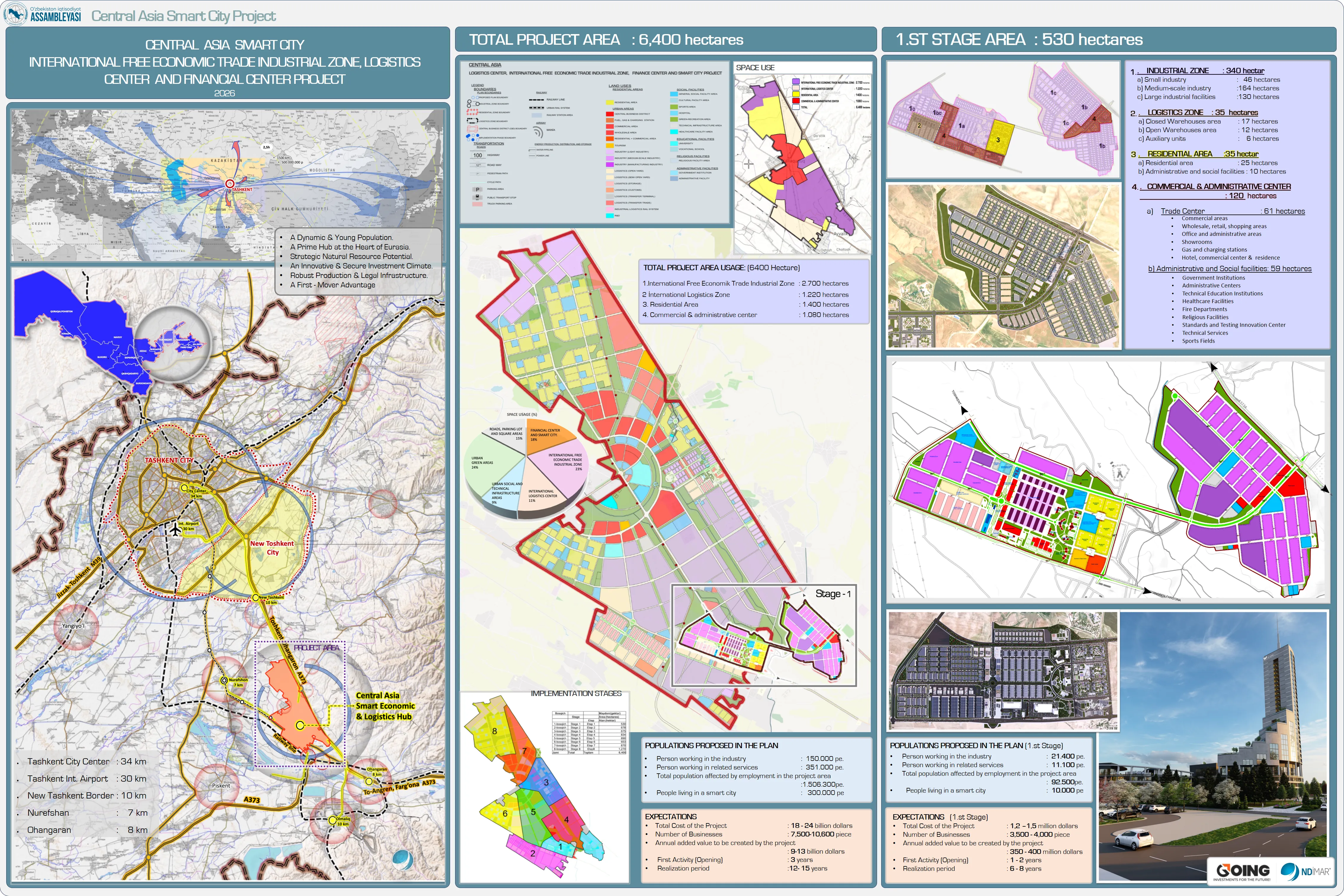
According to the official concept and master plan, the first phase consists of the following major zones:
The region includes an industrial cluster based on modern technologies. This cluster is divided into the following areas:
The zone is intended to create favorable production conditions for export-oriented enterprises.
Given the strategic location of the region, the logistics center will provide modern facilities for cargo transportation, storage and customs operations. This center will perform the tasks of redistributing regional transit flows and providing prompt service.
This zone includes administrative offices, social service centers, and various purpose-built facilities adapted to the needs of the community.
The residential area will be formed based on the requirements of modern urban planning. It will include:
is planned to be built.
This area is aimed at supporting international trade and business activities:
will be placed.
Once the first phase of the project is completed, significant economic activity is expected to occur in the area.
Once Phase 1 is operational, the area has the potential to create $300–400 million in economic value per year.
The project area is located close to the central part of the Tashkent agglomeration, at the junction of regional trade and transport flows:
This geographical advantage further enhances the logistical and economic efficiency of the project.
The first phase of the Central Asia Smart City project offers a comprehensive development model that combines modern urban planning, industrial and logistics infrastructure. This phase will not only expand the economic potential of the region, but also create new jobs, modern living conditions and innovative production areas. The successful implementation of the project will contribute to the formation of a new economic center in Central Asia.
Our Trusted Partners








GOING - Copyright . All rights reserved.